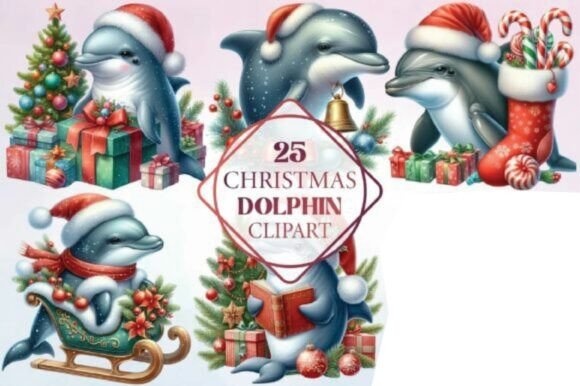
Reviewing Watercolor Christmas Dolphin Clipart for Stitching
As a designer who has spent countless hours digitizing and testing machine embroidery design files, I approach every new asset with a critical eye. It is not just about whether an image looks pretty on a screen; it is about how it translates into thread, how it behaves under the needle, and ultimately, how it performs in a real-world embroidery project. Recently, I evaluated Watercolor Christmas Dolphin Clipart to determine its viability for commercial and personal use. This review breaks down the practical implications of using this specific set of Illustrations in your craft business.
First Impressions and Visual Mood
The immediate appeal of Watercolor Christmas Dolphin Clipart lies in its unexpected juxtaposition. Dolphins are typically associated with summer and ocean breezes, while Christmas evokes snow and pine. This design bridges that gap with a soft, whimsical aesthetic. The watercolor style suggests fluidity and gentleness, which can be challenging to replicate in embroidery but offers a unique selling point if executed correctly. The mood is playful yet serene, making it an excellent candidate for baby embroidery or nursery decor where harsh lines and aggressive colors feel out of place.
For an Etsy seller or small shop owner, standing out during the holiday rush is crucial. Most holiday designs feature reindeer, snowmen, or traditional ornaments. A dolphin wearing a Santa hat or interacting with holiday elements creates a niche product that appeals to coastal families or those seeking a non-traditional personalized gift. The visual personality is light-hearted, which translates well to items meant to bring joy rather than formal elegance.
Real-World Application: The Tote Bag Test
To truly understand the value of this asset, I imagined applying it to a custom tote bag design. Canvas tote bags are a staple for craft business owners because they offer a large, stable surface area. When visualizing Watercolor Christmas Dolphin Clipart on a natural cotton canvas, the key consideration is color contrast. Watercolor effects rely on subtle gradients. In embroidery, achieving these gradients requires careful planning of thread colors and stitch types.
If I were producing this as a small shop product, I would likely opt for a fill stitch approach with varying densities to mimic the watercolor bleed, rather than a solid block of color. This technique adds texture and depth, enhancing the handmade product feel. Customers often associate intricate stitching with higher value. However, one must be cautious. Too much density can cause the fabric to pucker, especially on a tote bag that needs to remain flexible and durable. Testing on scrap fabric is non-negotiable here to ensure the stabilizer choice supports the weight of the thread without leaving a stiff residue.
Fabric Compatibility and Stitching Challenges
Not all fabrics treat Watercolor Christmas Dolphin Clipart equally. On smooth, tightly woven fabrics like poplin or high-quality cotton blends, the design will shine. The clean edges of the dolphin shape allow for precise satin stitch borders if you choose to outline the watercolor fills. However, challenges arise with textured fabrics. If you attempt this on a fuzzy fleece sweatshirt, the fine details of the watercolor effect may get lost in the pile. In such cases, simplifying the design or increasing the contrast between the dolphin and the background becomes necessary.
Stretchy fabrics present another hurdle. For custom apparel like t-shirts or baby onesies, the movement of the fabric can distort the image. Using a cut-away stabilizer is essential to maintain the integrity of the embroidery file after washing. Additionally, dark fabrics require careful planning. Watercolor designs often use light, pastel tones. Stitching light threads on dark fabric may require an underlay of white thread to prevent the fabric color from showing through, which adds bulk. Always check your hoop size to ensure the entire design fits without needing to re-hoop, which can lead to alignment issues.
Commercial Viability and Brand Consistency
For commercial embroidery projects, consistency is key. If your brand focuses on rustic, earthy tones, a bright, pastel watercolor dolphin might clash. However, if your brand identity leans toward whimsical, modern, or coastal themes, this design is a strong asset. It enhances brand consistency by offering a unique holiday option that differs from generic store-bought decorations. Buyers engage more with products that feel curated and thoughtful. A well-executed sweatshirt embroidery featuring this design can become a signature item for your boutique.
When creating printable mockup previews for your online store, ensure the digital representation matches the stitched reality. Over-saturating the colors in a mockup can lead to customer disappointment if the actual finished product appears muted due to thread limitations. Transparency builds customer trust. Show close-ups of the stitch work to highlight the quality of the digital embroidery file conversion. This attention to detail signals professionalism and justifies a higher price point.
Practical Designer Notes for Implementation
Before launching this design in your small shop product lineup, consider these technical steps:
- Test on Scrap Fabric: Always run a test stitch-out on the exact fabric type you plan to sell. Check for puckering, thread breaks, and color accuracy.
- Check Thread Contrast: Ensure the chosen thread colors stand out against the fabric. Use a black and white mockup to verify that the shape remains recognizable even without color.
- Review Stitch Density: High-density areas can cause needle heat and thread breakage. Adjust the density settings in your digitizing software if necessary.
- Confirm Hoop Size: Verify that the design fits within your standard hoop sizes. If it requires a large hoop, consider scaling it down for smaller items like embroidered patch applications or caps.
- Inspect Small Details: Watercolor edges can be fuzzy. Ensure that tiny details are not so small that they become indistinct when stitched. Simplify complex gradients if needed.
- Licensing Verification: Before selling design assets or finished items, confirm the license terms of the original clipart. Ensure it allows for commercial use in physical products.
In conclusion, Watercolor Christmas Dolphin Clipart offers a fresh perspective on holiday embroidery. It requires thoughtful execution regarding fabric choice, stabilizer use, and thread selection, but the result can be a standout holiday embroidery piece. For designers willing to put in the technical work, it transforms from a simple illustration into a valuable, sellable asset that delights customers seeking something unique and heartfelt.