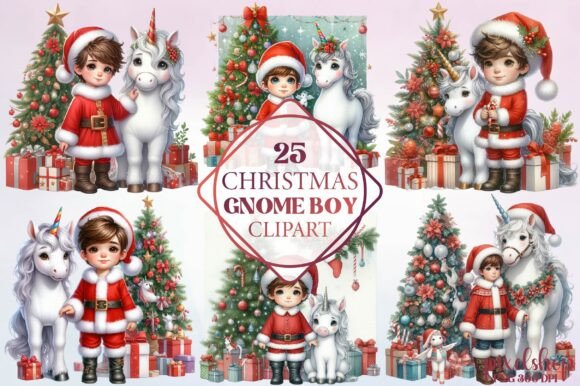
Review: Watercolor Christmas Gnome Boy Clipart for Stitching
As a designer who spends half my life staring at digitized files and the other half pulling thread through fabric, I have learned to be skeptical of trendy graphics. We see thousands of cute holiday motifs every November, but few translate well from screen to stitch. When I first opened the Watercolor Christmas Gnome Boy Clipart, my initial reaction was cautious curiosity. The soft, blended edges typical of watercolor Illustrations can be a nightmare for embroidery machines if not handled with care. However, after reviewing the layout and considering its potential in real-world applications, I found this design offers a unique charm that stands out in a crowded market of rigid, vector-style holiday graphics.
The Aesthetic Appeal and First Impressions
The immediate mood this design creates is one of gentle nostalgia. Unlike the sharp, high-contrast clipart often used for quick vinyl cuts, this gnome boy features softer transitions and a hand-painted feel. For an embroidery project, this presents both a challenge and an opportunity. The visual personality is warm and inviting, making it ideal for products that aim to evoke comfort rather than just festive loudness. The shape is balanced, with a proportionate hat and beard that suggest movement without excessive complexity. This is crucial because overly complex details often get lost in the stitching process, turning a cute character into a muddy blob of thread.
When evaluating this as a potential asset for my craft business, I looked closely at the detail level. The eyes and nose are distinct enough to remain clear even at smaller sizes, while the hat’s texture suggests depth without requiring thousands of stitches. This balance is rare in digital embroidery files that try to mimic painterly styles. It feels like a design created by someone who understands that embroidery is a tactile medium, not just a digital print.
Real-World Application: The Holiday Tote Bag Test
To truly judge a design, you must imagine it on a physical product. I visualized using this Watercolor Christmas Gnome Boy Clipart on a natural canvas tote bag. This is a staple item for any Etsy seller or small shop product during the holiday season. The earthy tone of unbleached canvas provides the perfect neutral background for the gnome’s colorful attire. In this scenario, the design acts as the focal point, drawing the eye immediately.
I also considered its use on a heather grey sweatshirt. Sweatshirt embroidery requires designs that can handle the texture of fleece or French terry fabric. The gnome’s slightly organic lines work well here, as they do not fight against the fabric’s nap. If this were a rigid, geometric design, it might look stiff on a soft garment. Instead, the watercolor aesthetic complements the cozy nature of winter apparel. For baby embroidery, such as on a onesie or a burp cloth, the gentle colors are less aggressive than traditional bright reds and greens, appealing to modern parents who prefer muted, nursery-friendly palettes.
Navigating Technical Challenges in Stitching
While the design is visually appealing, practical execution requires attention to detail. Watercolor effects rely on gradients, which are difficult to achieve with standard thread colors. If you are digitizing this yourself or working with a pre-made embroidery file, you must check the stitch density carefully. Too dense, and the fabric will pucker; too sparse, and the "watercolor" effect will look patchy. I recommend using a combination of fill stitches for the larger areas like the hat and body, and satin stitch for defined edges like the beard outline or belt.
Fabric choice is critical. This design performs best on stable, medium-weight fabrics. On thin or stretchy fabric, such as a lightweight t-shirt, you must use a high-quality stabilizer to prevent distortion. The curved surfaces of caps or hats present another challenge. The gnome’s vertical orientation works well on a cap front, but you must ensure the hoop size accommodates the full height of the hat without stretching the design. Always test the design on scrap fabric first. Check how the thread colors contrast against your chosen material. A dark navy shirt might swallow the darker shades of the gnome’s coat, so you may need to adjust thread colors for better visibility.
Commercial Value and Brand Consistency
For commercial embroidery projects, consistency is key. Using a distinctive style like this helps build brand recognition. If your handmade product line focuses on whimsical, storybook-inspired items, this gnome fits seamlessly. It enhances the perceived value of the finished product because it looks artistic rather than mass-produced. Customers often associate watercolor styles with higher effort and creativity, which can justify a higher price point for personalized gifts or boutique branding.
However, before listing this as a design asset or selling finished items, you must confirm licensing terms. Not all digital embroidery files allow for unlimited commercial use. Check whether the license covers physical goods, digital previews, or printable mockups. As an Etsy seller, protecting your shop from copyright issues is as important as the quality of your stitching. Ensure that the file format you receive is compatible with your machine, whether it is PES, DST, or another common type.
Practical Designer Notes for Best Results
To get the most out of this design, follow these practical steps:
- Test on Scrap Fabric: Never stitch directly on your final garment. Use a similar fabric weight and type to check for puckering or thread breaks.
- Check Thread Contrast: View the design in black and white on your screen. If the details disappear, you may need to choose higher-contrast thread colors for the actual stitching.
- Review Stitch Density: If the file allows editing, reduce density slightly for fluffy fabrics like towels or fleece to prevent stiffness.
- Confirm Hoop Size: Ensure your hoop can accommodate the full design without re-hooping, which can cause alignment issues.
- Inspect Small Details: Zoom in on the eyes and buttons. If they are too small, consider simplifying them or using a single satin stitch instead of multiple runs.
- Use Proper Stabilizer: A cut-away stabilizer is often best for garments that will be washed frequently, ensuring the design remains stable over time.
In conclusion, the Watercolor Christmas Gnome Boy Clipart is a strong contender for holiday collections. It bridges the gap between digital art and tactile craft, offering a soft, approachable aesthetic that resonates with modern buyers. By paying attention to fabric choice, stabilizer use, and thread selection, you can transform this digital illustration into a standout embroidered patch, tote bag design, or custom apparel piece. It is a reminder that in embroidery, as in painting, the magic lies in the execution.