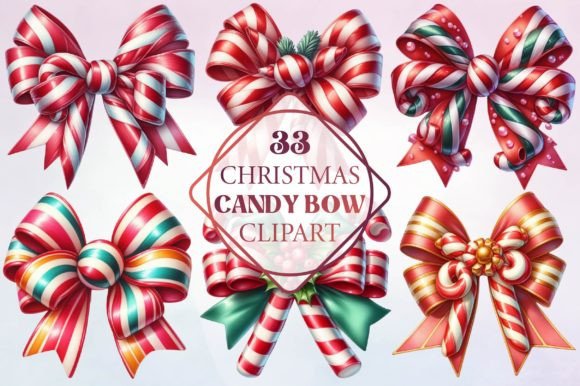
Reviewing Watercolor Christmas Candy Bow Clipart for Embroidery
As a designer who spends half my life staring at digitized files and the other half watching needles punch through fabric, I have learned to look past the initial visual appeal of a graphic. We often browse marketplaces for Illustrations that catch our eye, but the real test is always in the stitching. Recently, I spent some time evaluating the Watercolor Christmas Candy Bow Clipart to determine if it translates well from a digital asset into a tangible, high-quality embroidery project. This review is written for fellow embroidery designers, Etsy sellers, and craft entrepreneurs who need to know if this design will hold up in real-world applications.
First Impressions and Visual Mood
The immediate impression of the Watercolor Christmas Candy Bow Clipart is one of softness and nostalgia. Unlike the sharp, vector-based graphics we often see in holiday collections, this piece carries a hand-painted aesthetic. The edges are slightly blurred, mimicking the bleed of watercolor paint on paper. For an embroidery designer, this presents both a challenge and an opportunity. The mood is gentle and whimsical, making it ideal for projects that require a touch of warmth rather than rigid precision.
When I visualize this design on a finished product, I do not see it on a stiff corporate uniform. Instead, I see it on a cozy tote bag design meant for holiday gift wrapping, or perhaps as a delicate accent on a linen kitchen towel. The visual personality suggests that this is best suited for items that are touched frequently and cherished for their handmade quality. It feels organic, which is a rare and valuable trait in digital design assets.
Real-World Application Scenarios
To truly understand the value of this clipart, I mentally placed it into several common production scenarios. Here is how I believe it performs in practical use:
- Custom Apparel: On a cream-colored sweatshirt, the soft edges of the bow would blend beautifully with the fleece texture. A sweatshirt embroidery project using this design would feel high-end and boutique-ready, avoiding the "stiff sticker" look that plagues cheaper designs.
- Baby Items: This is arguably the strongest use case. The gentle color palette and non-aggressive lines make it perfect for baby embroidery on onesies or burp cloths. Parents often prefer softer visuals for infants, and this design delivers that safety and comfort visually.
- Holiday Gifts: Imagine this stitched onto a canvas apron for a baking enthusiast. As a personalized gift, it adds a layer of thoughtfulness. It does not scream "holiday" with aggressive reds and greens but whispers it with subtlety, appealing to customers who prefer modern, understated decor.
- Patches and Accessories: For an embroidered patch, the watercolor effect might require careful digitizing to ensure the color transitions do not become muddy. However, if executed with varied thread shades, it could create a stunning, painterly effect on a denim jacket or backpack.
Technical Considerations for Stitching
While the aesthetic is lovely, we must address the technical realities of converting a watercolor-style image into thread. Watercolor relies on gradients and transparency, two things that embroidery machines struggle to replicate naturally. If you are using this as a reference for creating a machine embroidery design, you cannot simply auto-digitize it. You must manually plan your thread colors.
I recommend using a combination of fill stitch for the broader areas of the bow and running stitch or light satin stitch for the finer details. The key is to avoid excessive stitch density. If the design is too dense, the fabric will pucker, and the soft watercolor illusion will be lost under a wall of thread. You want the fabric to show through slightly in places to mimic the white space of a watercolor painting.
Another critical factor is the hoop size. Ensure that the design fits comfortably within your hoop without being scaled down so much that the details merge. Tiny, intricate watercolor bleeds can turn into indistinguishable blobs if the design is shrunk below a certain threshold. Always check the scale before hitting start.
Fabric and Stabilizer Choices
The success of this design depends heavily on the substrate. On textured fabrics like linen or cotton canvas, the watercolor look thrives because the texture complements the organic feel of the bow. However, on slick or stretchy fabrics, you may face stability issues. I strongly advise using a cut-away stabilizer for garments that will be washed frequently, such as t-shirts or baby clothes. This ensures the design remains crisp and does not distort over time.
Be cautious with dark fabrics. The pastel and light tones typical of watercolor art may not pop against black or navy blue unless you use a bright underlay or choose high-contrast thread colors. Always test your embroidery file on scrap fabric first. Create a mockup in black and white to check for contrast issues before committing to expensive threads.
Commercial Viability and Brand Consistency
For small shop product lines, consistency is key. If your brand focuses on rustic, handmade, or vintage-inspired items, the Watercolor Christmas Candy Bow Clipart is a strong addition to your library. It enhances brand consistency by offering a cohesive look across different products, from pillow covers to caps.
However, if your brand is modern, minimalist, or geometric, this design might clash. Know your audience. Customers buying handmade product items often look for uniqueness. This design offers that by stepping away from standard clipart borders. It signals to the buyer that care was taken in the selection and execution of the design, which builds customer trust and increases perceived value.
Practical Designer Notes
Before you list this as a commercial embroidery item or use it in client work, keep these final checks in mind:
- Verify Licensing: Never assume a digital file is free for commercial use. Check the license terms explicitly to ensure you can sell finished items or use it in printable mockup previews.
- Thread Matching: Do not rely on standard color charts alone. Hold physical thread spools against the digital image to find the closest match for those subtle watercolor gradients.
- Test Washability: If the end product is a tote bag or apparel, wash the test piece. Watercolor effects can sometimes look fragile; ensure the stitches hold up to agitation.
- Detail Inspection: Zoom in on the digital file. Are there tiny isolated pixels? These will be nightmares to stitch. Clean up the design digitally before digitizing if necessary.
In conclusion, the Watercolor Christmas Candy Bow Clipart is a versatile and charming asset for the right project. It requires a thoughtful approach to digitizing and material selection, but when done correctly, it elevates simple items into cherished keepsakes. For the craft business owner looking to add a touch of artistic flair to their holiday collection, this design is worth the effort.