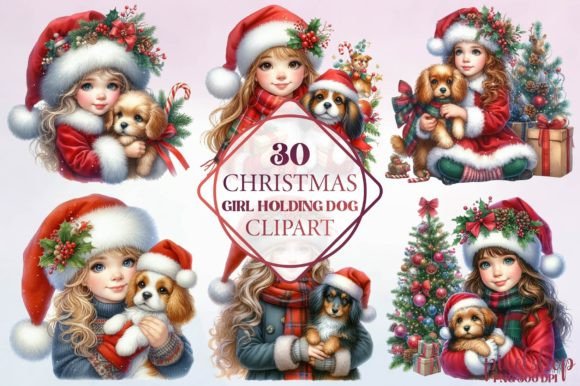
Reviewing the Christmas Girl & Dog Clipart for Stitching
As a designer who has spent countless hours staring at digitized files and watching needles punch through fabric, I have learned that not every cute graphic translates well into thread. When I first pulled up the Christmas Girl Holding Dog Clipart, my initial reaction was one of cautious optimism. The illustration style is charming, evoking that specific warmth associated with holiday nostalgia, but charm alone does not make a viable embroidery project. I needed to determine if this design could withstand the mechanical realities of a sewing machine while maintaining its artistic integrity on a finished product.
First Impressions and Visual Personality
The mood of this piece is undeniably cozy. It captures a quiet moment between a child and a pet, which is a powerful emotional hook for customers looking for personalized gifts. From a layout perspective, the composition feels balanced, though the level of detail requires careful scrutiny. In the world of Illustrations, soft gradients and fine lines are common, but in embroidery, we are limited by thread thickness and stitch direction. The visual personality here leans toward whimsical, which suggests it would perform best on items meant to feel soft and approachable, rather than structured or corporate.
I immediately looked for potential trouble spots. Are there tiny, isolated stitches that might pop out? Is the contrast between the girl’s clothing and the dog’s fur distinct enough to read clearly from a distance? These are the questions that separate a amateur hobbyist project from a professional handmade product. The design seems to rely on clear shapes, which is a good sign, but the interaction between the two figures needs to be checked for overlapping elements that could cause thread breaks or bulky buildup.
Real-World Application: The Holiday Tote Test
To truly evaluate this asset, I imagined a specific real-life scenario: a custom order for a boutique client wanting a set of holiday gift bags. I pictured stitching this design onto a heavy canvas tote bag design. This is a popular request for Etsy sellers and small shop owners during the fourth quarter. On a sturdy fabric like canvas or denim, the design has a solid foundation. The stitch density would need to be moderate to prevent the fabric from puckering, but high enough to cover the weave completely.
If I were producing this for a craft business, I would likely position the design centrally on the front panel. The emotional appeal of a child and dog resonates strongly with buyers looking for personalized gift options for grandparents or parents. However, I would also consider using it as a focal point on a sweatshirt embroidery project. A crewneck sweatshirt provides a stable, non-stretchy surface if properly hooped, allowing the details of the girl’s expression and the dog’s features to remain crisp. For a small shop product, this versatility is key. It allows you to offer the same digital embroidery file across multiple product lines without needing significant redesign work.
Navigating Fabric and Hoop Constraints
While the design is versatile, it is not without its limitations. I would exercise caution when applying this to stretchy fabrics or thin materials. If you are attempting baby embroidery on a onesie, the weight of the thread must be balanced against the delicacy of the garment. A heavy fill stitch area could make the fabric stiff and uncomfortable for an infant. In such cases, reducing the density or opting for a lighter weight thread is essential. Similarly, curved surfaces like caps present a challenge. The horizontal expanse of the girl and dog might distort if not stabilized correctly on a cap frame. Always use a firm stabilizer to support the design, especially if you are working with textured fabrics where the needle might struggle to penetrate evenly.
Another critical consideration is color contrast. On dark fabrics, the lighter tones of the design will pop, but you must ensure your thread colors are vibrant enough to stand out against the background. I recommend testing the design in black and white mockups first. If the shapes blend together in grayscale, they will likely lack definition when stitched. This is a common pitfall for embroidery project planners who focus too much on color and not enough on value and shape clarity.
Commercial Viability and Brand Consistency
For commercial embroidery users, the professionalism of the final output is paramount. A messy stitch-out can damage brand reputation. This design, if digitized correctly, offers a clean look that enhances customer trust. It feels intentional and crafted, which increases the perceived value of the finished product. Whether you are selling embroidered patch items or full garments, the clarity of the image contributes to buyer engagement. Customers are more likely to share photos of products that look sharp and well-made, providing you with free marketing through social media.
However, before listing this as a design assets for sale or using it in client work, you must verify the licensing terms. Not all clipart is cleared for commercial use in physical goods. Ensure that your license covers the creation of custom apparel and other tangible items. Additionally, check if the file format provided is compatible with your specific machine. While most modern machines accept standard formats, having the correct embroidery file type saves time and prevents conversion errors that can alter stitch paths.
Practical Designer Notes for Execution
Before committing to a full production run, always stitch out a test sample on scrap fabric similar to your final material. Pay close attention to the transition areas between the girl and the dog. Look for any jumping threads or loose ends that might need manual trimming. Check the hoop size requirements; if the design is large, ensure your machine can accommodate the necessary frame without hitting obstacles. If the design includes small text or intricate details, verify that they are legible at the intended size. Sometimes, scaling down a design for a smaller item like a pocket square can render fine details invisible.
Consider the washing instructions for the end user. If this is going on a kitchen towel or a frequently washed item, ensure the thread quality is high and the backing is secure to prevent fraying over time. For holiday embroidery projects that may only be displayed seasonally, durability is less critical, but presentation remains key. Use high-gloss threads for accents if you want to add a festive sparkle, but keep the main elements in matte cotton or polyester for a classic look.
In conclusion, the Christmas Girl Holding Dog Clipart holds promise for designers who understand the technical nuances of machine embroidery. It is not just a picture; it is a blueprint for thread. By respecting the limitations of fabric, stabilizer, and stitch density, you can transform this illustration into a cherished heirloom or a best-selling item in your online store. Treat it with the precision it deserves, and it will reward you with a product that speaks to the heart of the holiday season.