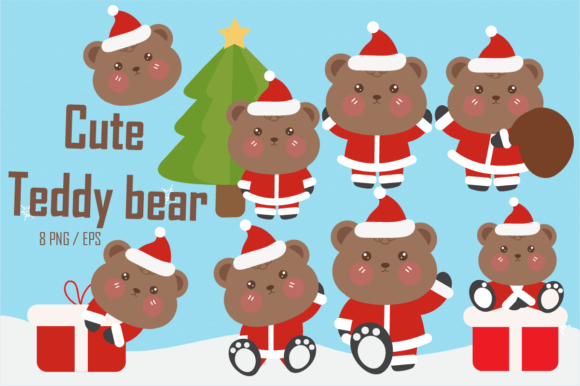
Reviewing Christmas Little Bear Illustrations
As a graphic designer who has spent over a decade refining brand identities and crafting marketing visuals for small businesses, I approach every new graphic design asset with a critical eye. It is not enough for an image to be cute; it must be functional, versatile, and capable of elevating a client’s message. Recently, I evaluated Christmas Little Bear for a seasonal campaign involving a boutique handmade gift shop. The goal was to determine if this specific set of Illustrations could carry the visual weight of a full product launch, from packaging to social media graphics.
My first impression of Christmas Little Bear was one of immediate warmth and nostalgia. The visual mood is soft yet distinct, avoiding the overly saturated colors that often plague holiday designs. Instead, it leans into a cozy, storybook aesthetic that feels authentic rather than manufactured. For a client targeting families and gift-givers who value craftsmanship, this style represents trust and comfort. It fits naturally into projects requiring a touch of whimsy without sacrificing professionalism. When I placed the bear motif against a clean, neutral background, it stood out as a strong focal point, proving its potential as a hero graphic for packaging design and product labels.
Performance in Real-World Design Scenarios
The true test of any digital product is its adaptability across various mediums. In my review, I simulated several real client scenarios to see how Christmas Little Bear performed. For logo design and brand identity work, the illustration served as an excellent secondary mark or icon. While it might be too detailed for a primary wordmark, it worked beautifully as a seal or badge element on tote bags and merchandise. This versatility is crucial for small business branding, where assets need to stretch across multiple touchpoints.
When considering print-on-demand applications, such as t-shirt design or mug prints, the clarity of the lines held up well. I tested the asset in a Cricut project simulation, imagining it cut from vinyl for holiday decals. The shapes were clean enough to suggest that an SVG design version would allow for easy editing and scaling without losing integrity. For Etsy product creators, this means the asset can be used for sticker design or printable wall art with minimal cleanup. The emotional appeal here is high; customers are drawn to characters that evoke childhood memories, making this a strong candidate for marketing visuals during the holiday rush.
In the realm of social media graphics, Christmas Little Bear shines as a decorative accent. I integrated it into mockups for Instagram posts and Pinterest pins, pairing it with bold typography. The illustration did not compete with the text but rather framed it, enhancing the overall composition. For bloggers and content creators using Canva template systems, this type of clipart is invaluable for breaking up long-form text or adding visual interest to editorial design layouts. It transforms a standard blog header into a themed, engaging visual that encourages clicks and shares.
Strategic Placement and Visual Hierarchy
Understanding where to place Christmas Little Bear is key to maintaining visual hierarchy. This asset works best in large layout areas where it can breathe. On product mockups, placing the bear centrally on a box or bag creates an immediate emotional connection. It serves as a powerful anchor for commercial design campaigns, drawing the eye before the viewer reads the promotional text. However, designers must be cautious. In crowded layouts or complex backgrounds, the delicate details of the bear might get lost. It is not suitable for low-contrast designs where the background color clashes with the illustration’s palette.
I found that Christmas Little Bear should be used carefully in minimalist branding or professional corporate materials that require a very clean, sterile look. While it adds charm, it may undermine the seriousness of a financial or legal brand. For web design, it is perfect for landing pages promoting seasonal sales but should be avoided in navigation bars or footer elements where simplicity is paramount. The goal is to use the illustration to support the brand narrative, not to distract from the core message.
Practical Designer Notes and Technical Checks
Before committing Christmas Little Bear to a client project, I always run a series of technical checks. First, I test the asset in black and white. This reveals whether the form holds up without color reliance, which is essential for faxed documents, newspaper ads, or single-color printing. Next, I check contrast on both light and dark backgrounds. A common pitfall with holiday illustrations is poor visibility on dark reds or greens; ensuring the bear has sufficient separation from the background is critical for readability and recognition.
Previewing the asset at small and large sizes is non-negotiable. At thumbnail size, does it still read as a bear? At poster size, do the edges remain crisp? If you are working with a PNG design, inspect the transparency carefully to ensure no white halos surround the character. For vector users, check the SVG design file for unnecessary anchor points that could complicate cutting or editing. Comparing the illustration with various font styles also helps. I found that Christmas Little Bear pairs exceptionally well with handwritten fonts and soft serif fonts, creating a cohesive, organic feel. It clashes slightly with rigid, geometric sans-serif fonts unless used ironically.
Finally, always confirm the commercial license terms. Whether you are buying from a creative marketplace or downloading from a free resource, understanding usage rights is vital for commercial design. Ensure the license covers sublimation design, physical product sales, and digital redistribution if you are creating a design bundle for resale. Protecting your client and your business from legal issues is just as important as the aesthetic quality of the work.
In conclusion, Christmas Little Bear is a robust and emotionally resonant illustration that offers significant value for designers working on holiday-themed projects. Its ability to enhance brand consistency while driving audience engagement makes it a standout choice for handmade business owners and small business branding efforts. By respecting its limitations and leveraging its strengths in packaging design, social media graphics, and printable design, you can create polished, professional results that resonate with your target audience. It is not just a cute image; it is a strategic tool for visual storytelling.